
China Issues second warning over OpenClaw AI security risks - Viagoo Pixel AI Workflow may be the solution
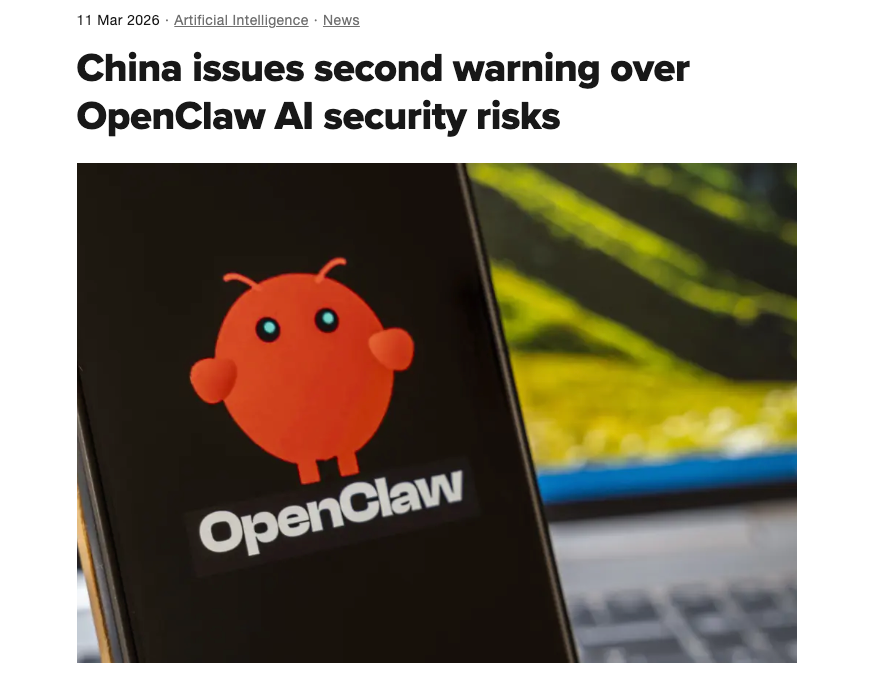
The open-source AI agent OpenClaw (often called "The Lobster") has recently shifted from a tech sensation to a major security concern, prompting the Chinese government to issue multiple warnings.
OpenClaw gained viral popularity for its ability to act as an "autonomous agent"—meaning it doesn’t just chat, but can control your computer to book flights, manage emails, and run scripts. However, its "deep access" design has created what researchers call a "cybersecurity nightmare."
Key Risks Identified by Chinese Authorities (CNCERT & MIIT):
Privileged Access Abuse: OpenClaw requires high-level system permissions. If misconfigured, it can allow attackers to take over the host system, steal data, or delete files accidentally.
Public Internet Exposure: Many users have deployed OpenClaw on public-facing servers without proper authentication, leaving them vulnerable to remote code execution (RCE).
Prompt Injection: Hackers can hide malicious instructions in web content. If an agent reads that content, it can be "tricked" into leaking system keys or performing unauthorized actions.
Plugin Vulnerabilities: A study found that over 13% of third-party "skills" (plugins) in the OpenClaw ecosystem contained critical security flaws.
How Viagoo Pixel AI Overcomes These Concerns
While OpenClaw represents an "open-access" model that prioritizes speed over safety, enterprise-grade solutions like Viagoo’s Pixel AI take a security-first approach. Here is how it addresses the specific failures of tools like OpenClaw:
1. Secure & Flexible Deployment
OpenClaw’s biggest risk is its exposure to the public internet. Viagoo Pixel AI offers fully compliant on-premises installations. By running the AI within an organization’s internal network (behind their firewall), data never leaves the secure perimeter, eliminating the risk of public-facing asset exposure.
2. Multi-Model Governance
One major issue with OpenClaw is the "unvetted" nature of its code and plugins. Pixel AI allows organizations to choose and switch between industry-leading or open-source models that have been vetted for performance and compliance. This prevents "shadow IT" where employees use unverified, risky tools.
3. Restricted Operational Permissions
Unlike OpenClaw, which often runs with broad system access, Pixel AI is designed to extract, classify, and validate data from documents within a controlled environment. By focusing on specific document-processing workflows rather than general system-wide control, it significantly reduces the "attack surface" available to hackers.
4. Privacy-Centric Architecture
While OpenClaw has been caught storing sensitive API keys in plaintext, Pixel AI is built with security front and center. It emphasizes data safeguarding at every step of the extraction and validation process, ensuring that sensitive organizational data is encrypted and handled according to regulatory requirements.
The "Lobster" craze in China serves as a cautionary tale: autonomy without architecture is a liability. For businesses looking to harness AI without the "absolute nightmare" of security breaches, moving toward managed, secure-by-design platforms like Pixel AI is no longer optional—it's a necessity.
Source: https://www.techinasia.com/news/china-issues-warning-over-openclaw-ai-security-risks